Almonds are very ornamental trees bearing showy, light pink blossom in spring which may need protecting from frost. Hand pollination and planting two different varieties will enhance crop size. Do not plant near peaches as hybridisation may occur resulting in bitter nuts. Very resistant to peach leaf curl and crop in September. Very reliable cropper producing well flavoured good quality nuts.Young trees on St. Julien rootstock.
AVAILABILITY: Click on Check Availability to check stock. Items marked Br (Bare rooted) can normally be sent between November and March.
Almonds are very ornamental trees bearing showy, light pink blossom in spring which may need protecting from frost. Hand pollination and planting two different varieties will enhance crop size. Do not plant near peaches as hybridisation may occur resulting in bitter nuts. Very resistant to peach leaf curl and crop in September. Very hardy setting large, 3-4cm (1-1.5ins) gorgeous, sweet nuts.Young trees on St. Julien rootstock.
Rich sweet flavoured, large juicy fruits with deep orange flesh are produced from August to early September. Self-fertile. RHS award of garden merit. Best grown as a fan trained tree against a west, south-west or south wall where it will need a minimum area of 12ft wide (3.6m) and 6ft high (2 metres). They will crop as free standing trees in a sheltered sunny position free from late frosts. Plant 15-18ft (4.6-5.5m) apart. Young trees suitable for growing as bush or fan-trained trees. Rootstock St. Julien A.
New Canadian variety that has revolutionised apricot growing in Europe. Attractive compact tree producing superb juicy fruits. Self-fertile. Best grown as a fan trained tree against a west, south-west or south wall where it will need a minimum area of 12ft wide (3.6m) and 6ft high (2 metres). They will crop as free standing trees in a sheltered sunny position free from late frosts. Plant 15-18ft (4.6-5.5m) apart. Young trees suitable for growing as bush or fan-trained trees. Rootstock St. Julien A.
See St. Julien A rootstock
We can supply the following Rootstocks to enable you to graft your cherry trees. Cherries Colt - Very productive semi-vigorous stock. Good fertile soil needed. Semi-vigorous. Height 15ft (4.6m).
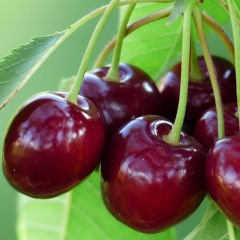
Excellent flavoured, large black cherries which are good eaten straight from the tree or can be used for pies and preserves. A garden favourite which sheds fruit when green but always leaving plenty to ripen later. Canadian variety from 1984.
A variety from Kent which bears large, round, very dark red, juicy sharp acid flavoured fruits with dark red flesh which are excellent for cooking, sauces, pies, jam and wine making. Regular heavy cropper. Excellent for fan training on north wall. Self-fertile. Award of Garden Merit. Supplied bare rooted on Colt rootstock (a semi-dwarfing rootstock) or on Giesla rootstock (a dwarfing rootstock ideal for a small garden). Planting distance: Bush and fan-trained 12-15ft (3.7-4.6m), half standard 15-20ft (4.6m-6m).
Reliable Canadian variety introduced in 1968. Juicy excellent flavoured large dark red cherries, sweet and delicious. Good cropper, vigorous upright growth. Self-fertile. Award of Garden Merit. Supplied bare rooted on Colt rootstock (a semi-dwarfing rootstock) or on Giesla rootstock (a dwarfing rootstock ideal for a small garden). Planting distance: Bush and fan-trained 12-15ft (3.7-4.6m), half standard 15-20ft (4.6m-6m).
Reliable, highly recommended dessert cherry from Norwich with sweet dark red fruits. Compact habit and suitable for colder more exposed areas. Self-fertile. Award of Garden Merit. Supplied bare rooted on Colt rootstock (a semi-dwarfing rootstock) or on Giesla rootstock (a dwarfing rootstock ideal for a small garden). Planting distance: Bush and fan-trained 12-15ft (3.7-4.6m), half standard 15-20ft (4.6m-6m).
Very large fruits of excellent flavour, black when ripe. Very heavy yield. Will store well for a short period after picking. Easy garden variety introduced from Canada in 1984. Self-fertile. Supplied bare rooted on Colt rootstock (a semi-dwarfing rootstock) or on Giesla rootstock (a dwarfing rootstock ideal for a small garden). Planting distance: Bush and fan-trained 12-15ft (3.7-4.6m), half standard 15-20ft (4.6m-6m). Maiden and Bush trees are suitable for fan training.
Highly recommended variety from Canada producing extremely large, sweet, juicy, creamy-white cherries with red flush which birds don't take so quickly. Not self-fertile but will cross pollinate with Stella or Sunburst. Supplied bare rooted on Colt rootstock (a semi-dwarfing rootstock). Planting distance: Bush and fan-trained 12-15ft (3.7-4.6m), half standard 15-20ft (4.6m-6m). Maiden and Bush trees are suitable for fan training.
Large oval fruits, brownish-red skins with sweet rich red flesh produced on plants with attractive lobed foliage. Fruits can be eaten fresh or bottled or dried for winter use. One of the hardiest varieties but is best planted against a warm wall or under glass with roots restricted. Young shoots and fruits may need protection from heavy frosts. Self-fertile. £9.95 if collected. Plant 18ft (5.5m) apart.
AVAILABILITY: Click on Check Availability to check stock. Items marked Pg (Pot grown) are normally available all year round.
Warning: Some parts of this plant are poisonous.
See Ornamental Shrubs section.
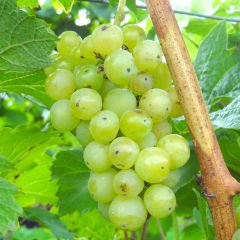
Consistently heavy crops of large bunches of superb flavoured grapes, large, black, sweet and juicy. Can also be used for wine. Sets freely and will grow well in a pot. Most popular greenhouse grape. Ripens well without heat. Self-fertile. Hardy and can be grown inside in a heated or unheated greenhouse or conservatory, or outside in a warm sunny position but is better grown under glass in order to ensure the fruit ripens.
Exceptionally heavy cropper, producing masses of small-medium sized delicious purple grapes, which are virtually seedless. Excellent for eating and wine making. Very good for growing outdoors in the British climate. Self-fertile. Hardy and can be grown inside in a heated or unheated greenhouse or conservatory, or outside in a warm sunny position.
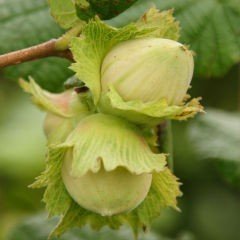
Cobnut. Vigorous upright grower. Large oval thin-shelled nuts, with short husks, and sweet flavour. Good pollinator. Better pollination is achieved when two different varieties are planted. Plant 12ft (3.7m) apart.
Moderately vigorous upright grower, prolific bearer of large long nuts of good flavour. Better pollination is achieved when two different varieties are planted. Plant 12ft (3.7m) apart.
Cobnut. Compact habit. Abundant crops of small to medium round nuts of good flavour. Good pollinator. Better pollination is achieved when two different varieties are planted. Plant 12ft (3.7m) apart.
Dark red catkins followed by rich purple leaves. Small nuts of excellent flavour. Very attractive if grown alongside Golden-Leaf Hazel. Better pollination is achieved when two different varieties are planted. Plant 12ft (3.7m) apart.
This variety is closely related to the traditional kiwi fruit which is found in shops, but it has the advantage of a hairless skin so does not need peeling. Fruit is about 1.5 ins (4cm) long and is extremely high in vitamin C, delicious and very sweet. Very hardy and makes a beautiful vine. Self-fertile.
Attractive vine which after two or three years will start to produce a crop of traditional 'fuzzy' kiwi fruits which are high in vitamin C. Hardy, but should be planted against a south or west facing wall. Self-fertile.
Medlars are much branched spreading trees grown as much for their ornamental appearance as their fruit. The young leaves are soft green with a hint of pink, and these often assume russet and yellow autumn colours. The 1-1.5 inch (2.5-4cm) wide saucer-shaped white or pink flowers appear singly at the tips of shoots in May or June. The unusual fruits then develop and these should be picked early in November, then stored for approximately three weeks until the flesh is brown. They are then ready for eating or jelly making. Height 20ft (6m), spread 20ft (6m). Self-fertile. Rootstock Crataegus. Plant 20ft (6m) apart.
Slow growing tree bearing good piquant flavoured loganberry-like fruits, which are excellent eaten raw, or used in jams, preserves or wine. Harvest fruits Aug. to Sept. Self-fertile. £14.95 if collected.
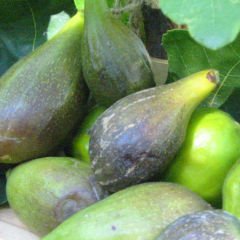
Fast growing spreading tree with large pale green leaves which are traditional food for silkworms. Very sweet fruits, 1 inch (2.5cm) long, which vary from white, pink or nearly black, are ripe in August and September. Self-fertile.
Young trees suitable for growing as bush or fan-trained trees. Rootstock St. Julien A. Very large, succulent and juicy, smooth-skinned fruits. Suitable for growing under glass, against a warm wall or in the open in warm areas. Nectarines need a warmer position than peaches to ensure the production of good quality fruit. Self-fertile. Young tree. Plant 15-18ft (4.6-5.5m) apart.
New outstanding variety from Seattle - greatest advancement in peach breeding in many years as it is the first variety to be resistant to peach leaf curl. Attractive pink flowers followed by delicious, large, juicy fruits from early August. Grow in sheltered southfacing location. Available on Montclaire or St. Julien A rootstock. Montclaire stock is highly productive, medium vigour and is less susceptible to frost damage. St. Julien A is a semi-vigorous rootstock. Plant 15-18ft (4.6-5.5m) apart.
Young trees suitable for growing as bush or fan-trained trees. Rootstock St. Julien A. Excellent flavour, large fruits, good cropper. Suitable for growing under glass, against a warm wall or in the open in warm areas. Self-fertile. Young tree. Plant 15-18ft (4.6-5.5m) apart.
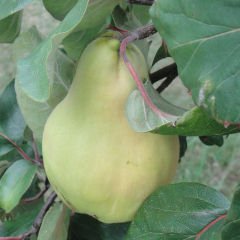
Quinces are very ornamental producing, at an early age, large, solitary blushpink flowers in spring. Medium-sized, apple shaped fruit of distinctive flavour which store well. Flesh turns a pink colour on cooking. Good for jam, jelly and wine. Self-fertile but produces even better crops if two different varieties are planted. For ornamental fruiting variety see Japanese Quince. Half standard trees available for collection from Garden Centre.Self-fertile. Rootstock Quince A. Supplied bare rooted. Plant 10-12ft (3-3.7m) apart.
Quinces are very ornamental producing, at an early age, large, solitary blushpink flowers in spring. Very large clear, shiny, pear shaped yellow fruits which are very fragrant and store well. Flesh softer than most varieties. Good for jam, jelly and wine. Vigorous upright growth. Self-fertile but produces even better crops if two different varieties are planted. For ornamental fruiting variety see Japanese Quince. Half standard trees available for collection from Garden Centre.Self-fertile. Rootstock Quince A. Supplied bare rooted. Plant 10-12ft (3-3.7m) apart.
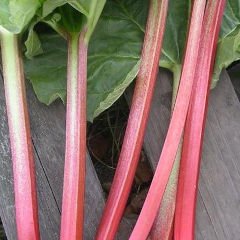
Bright red stems of very fine quality. Will tolerate partial shade. Self-fertile. Plant 3ft (90cm) apart.
Outstanding, reliable old variety with long, good coloured stems. Easy to grow, trouble free and long cropping period. Self-fertile. Plant 3ft (90cm) apart.
A majestic tree producing consistant heavy crops of delicious walnuts.See Hedging, Trees, Shrubs & Conifers section.
A grafted tree, which is slow growing, reasonably compact and produces heavy crops of large tasty nuts from an early age. Hardy but protect from late frosts when young.
A grafted tree which produces excellent crops of delicious walnuts but on a tree which only reaches about 25ft (8m) at maturity. Crops well when young and because of its ultimate size is more suitable as a garden variety.
© Buckingham Nurseries and Garden Centre, all rights reserved.